1. Introduction to Enterprise Network Failures
Understanding why enterprise networks fail is critical for businesses that rely on uninterrupted connectivity, real-time data access, and secure communications.
Enterprise networks are complex ecosystems made up of routers, switches, firewalls, servers, and structured cabling. When even one component fails, the impact can ripple across departments, data centers, and customer-facing services.
Most network failures are not sudden. They are the result of ignored warning signs, poor planning, or lack of professional hardware support.
2. Lack of Proactive Network Planning
One of the most common reasons why enterprise networks fail is inadequate planning during the design stage.
Enterprises often underestimate:
- Traffic growth
- Application demands
- Redundancy requirements
- Future scalability
Without proper planning, networks become overloaded faster than expected. This leads to frequent performance degradation, packet loss, and unexpected outages.
Professional planning ensures the network can grow with the business instead of becoming a bottleneck.
3. Aging and Unsupported Network Hardware
Enterprise hardware does not fail overnight, but aging equipment is a silent risk.
Common problems include:
- End-of-life hardware with no OEM support
- Obsolete firmware and security vulnerabilities
- Higher failure rates due to component wear
Many organizations continue using unsupported equipment without understanding the risk exposure. This is one of the hidden but serious causes behind enterprise network failures.
With expert hardware support, aging equipment can often be stabilized and safely extended while replacements are planned.
4. Poor Deployment and Configuration Practices
Even the best hardware can fail if deployed incorrectly.
Typical deployment issues include:
- Incorrect firmware versions
- Improper interface configuration
- Lack of redundancy
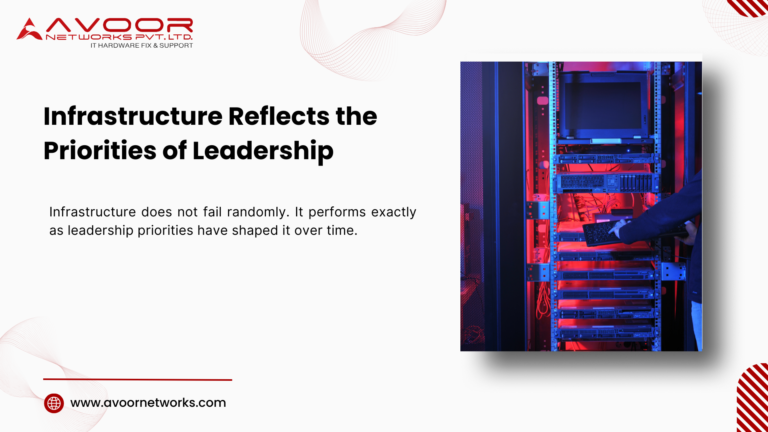
- Poor rack and cable management
These issues may not cause immediate failure but gradually degrade network stability. Over time, minor misconfigurations lead to recurring outages and troubleshooting complexity.
Professional deployment ensures networks are configured correctly from day one.
5. Absence of Preventive Maintenance
Preventive maintenance is often overlooked until a failure occurs.
Without routine maintenance:
- Dust and heat damage internal components
- Power fluctuations stress hardware
- Configuration drift goes unnoticed
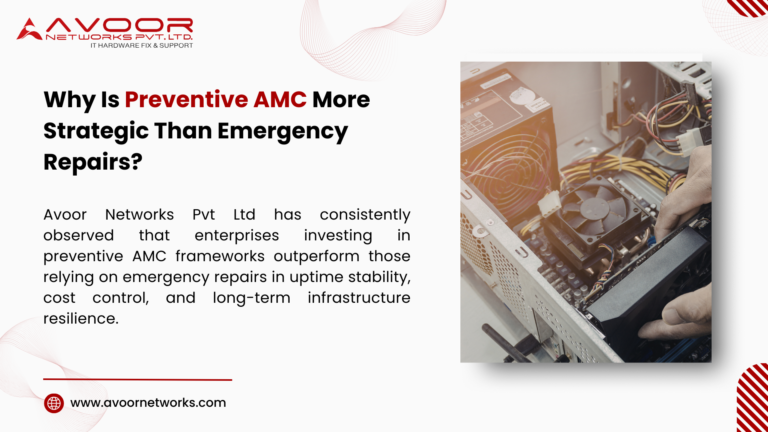
This neglect significantly increases the risk of sudden breakdowns. Enterprises that skip maintenance are more likely to experience unplanned downtime than those with structured support contracts.
Preventive maintenance plays a major role in reducing enterprise network failures.
6. Environmental and Power-Related Issues
Enterprise network equipment is highly sensitive to environmental conditions.
Common environmental causes of failure include:
- Inconsistent power supply
- Poor grounding
- Excessive heat and humidity
- Inadequate cooling in server rooms
These factors slowly damage hardware components and shorten equipment lifespan. Unfortunately, environmental issues are often discovered only after repeated failures occur.
Professional hardware support includes environmental assessment to prevent such risks.
7. Delayed Hardware Repairs and Spares Shortage
When hardware fails, response time matters.
Enterprises without professional support often face:
- Long diagnostic delays
- Lack of spare parts
- Dependency on OEM timelines
Every hour of delay increases downtime costs and business disruption. Quick access to diagnostics, spares, and skilled engineers is critical to restoring services.
Delayed repairs are a major contributor to prolonged enterprise network outages.
8. How Professional Hardware Support Prevents Network Failures
Professional hardware support transforms network management from reactive to proactive.
It helps by:
- Identifying risks before failures occur
- Performing preventive maintenance
- Providing rapid fault isolation and repair
- Extending hardware lifespan
- Reducing dependency on OEM-only support
This approach significantly lowers the probability of network failures while improving overall reliability.
9. Enterprise Hardware Support by Avoor Networks Pvt Ltd
Avoor Networks Pvt Ltd delivers professional enterprise hardware support tailored to mission-critical networks.
With 26+ years of experience, services include:
- Enterprise router, switch, and server support
- Preventive and corrective maintenance
- Chip-level hardware repair
- AMC and CAMC services
- Support for EOL and EOSL equipment
- Pan-India on-site and remote support
This structured support model helps enterprises prevent failures rather than react to them.
Conclusion: Preventing Enterprise Network Failures Before They Happen
Understanding why enterprise networks fail is the first step toward building resilient IT infrastructure. Most failures are not caused by hardware alone but by gaps in planning, maintenance, and support.
Professional hardware support addresses these gaps by ensuring proper deployment, proactive maintenance, rapid repairs, and informed upgrade decisions. Instead of dealing with repeated outages, enterprises gain stability, predictability, and long-term cost control.
In today’s always-connected business environment, preventing network failure is not optional. It is a strategic necessity.