Introduction
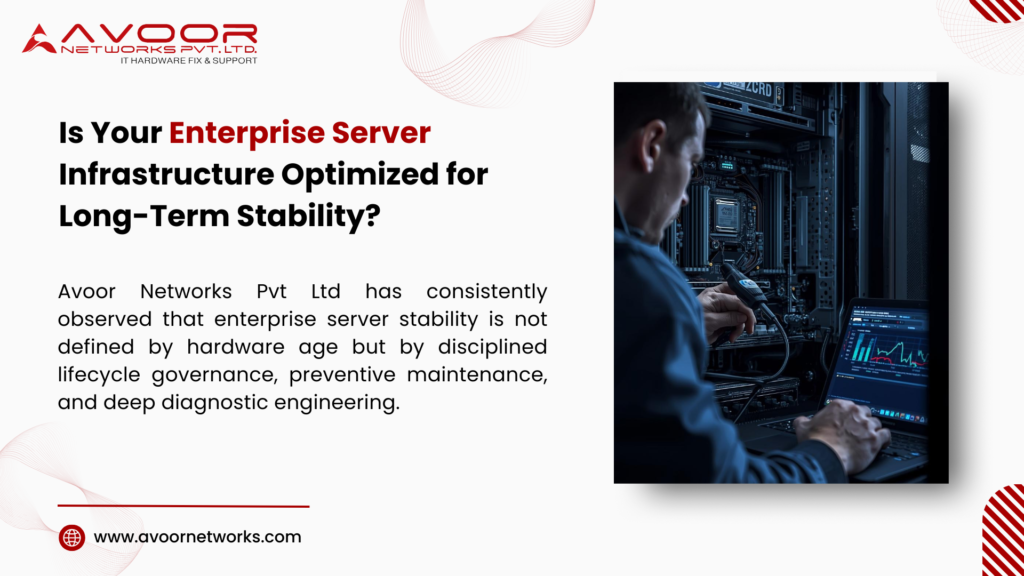
Enterprise server infrastructure stability is not achieved by installing high-performance hardware alone. It is built through disciplined lifecycle management, structured monitoring, preventive maintenance, and long-term architectural governance. In modern enterprise environments, servers power critical workloads—databases, ERP systems, virtual machines, security frameworks, analytics platforms, and cloud integrations. When server infrastructure fails, business operations halt.
Many organizations assume that purchasing premium hardware guarantees long-term performance. However, stability is not a product feature. It is a managed outcome. Server environments degrade over time due to thermal stress, firmware stagnation, workload imbalance, configuration drift, and deferred maintenance.
The question enterprises must ask is not whether their servers are powerful today, but whether their server infrastructure is structured to remain stable five to ten years from now.
Enterprise server infrastructure stability depends on proactive governance rather than reactive repair. Organizations that address stability gaps early prevent cascading failures, unexpected downtime, and reputational risk.
Below are nine critical gaps that determine whether your server environment is truly optimized for long-term stability.
1. Enterprise Server Infrastructure Stability Requires Preventive Maintenance Discipline
Preventive maintenance forms the foundation of enterprise server infrastructure stability.
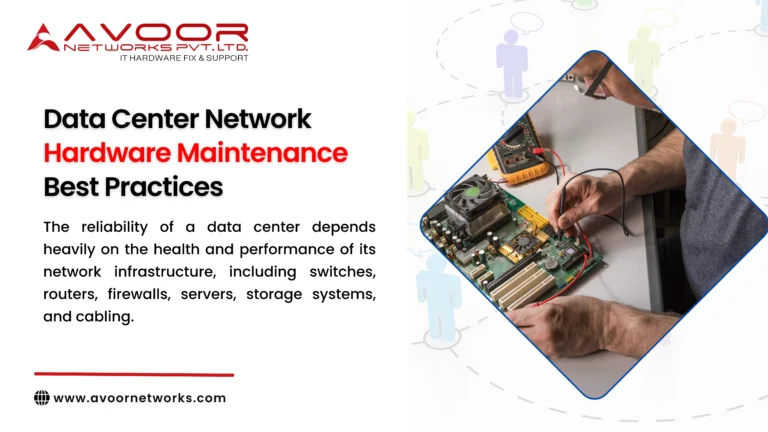
Servers operate continuously under heavy processing loads. Over time, dust accumulation, thermal inefficiency, aging power supplies, and degraded cooling fans introduce performance risk. Minor hardware degradation can escalate into system-wide instability.
Preventive maintenance includes:
- Internal component inspection
- Thermal and airflow validation
- Firmware updates
- RAID health checks
- Log file diagnostics
- BIOS and controller validation
Organizations that perform maintenance only after failure expose themselves to preventable downtime.
Long-term server stability requires scheduled inspection cycles rather than emergency intervention.
Preventive discipline extends hardware lifespan and reduces failure probability.
2. Capacity Planning Gaps Undermine Enterprise Server Infrastructure Stability
Server instability often results from workload imbalance rather than hardware weakness.
Enterprise server infrastructure stability depends on realistic capacity planning. Servers operating continuously at 85–95% utilization experience accelerated stress. Performance bottlenecks amplify under peak demand.
Capacity planning must evaluate:
- CPU utilization trends
- Memory saturation patterns
- Storage I/O throughput
- Virtualization density ratios
- Application scaling forecasts
Without headroom for growth, servers operate in sustained stress mode.
Long-term stability requires balanced workload distribution and forward-looking resource allocation.
Organizations that ignore capacity modeling often mistake overload for aging.
3. Firmware and Patch Management Directly Impact Enterprise Server Infrastructure Stability
Outdated firmware and irregular patch cycles introduce hidden risk.
Enterprise server infrastructure stability is strengthened through disciplined firmware governance.
Firmware stagnation may cause:
- Compatibility conflicts
- Security vulnerabilities
- Performance inefficiencies
- Controller instability
Structured patch management includes:
- Scheduled firmware audits
- Compatibility testing before deployment
- Security advisory monitoring
- Controlled rollout procedures
Reliability declines when firmware discipline weakens.
Server hardware longevity must be paired with software lifecycle governance.
4. Environmental Controls Are Essential for Enterprise Server Infrastructure Stability
Physical environment influences stability significantly.
Enterprise server infrastructure stability depends on:
- Consistent temperature regulation
- Humidity control
- Dust management
- Power conditioning
- Redundant UPS systems
Overheating accelerates capacitor degradation. Voltage fluctuations damage circuit boards. Poor airflow increases component wear.
Server rooms and data centers must be monitored continuously.
Environmental instability often precedes hardware failure.
Long-term server optimization begins with facility governance.
5. Redundancy Architecture Determines Enterprise Server Infrastructure Stability
True stability requires redundancy.
Single points of failure expose enterprises to catastrophic risk.
Enterprise server infrastructure stability improves through:
- Redundant power supplies
- RAID storage configurations
- Failover clustering
- Load-balanced application tiers
- Backup network interfaces
Redundancy ensures availability during component-level failure.
However, redundancy must be tested regularly. Unvalidated failover systems provide false confidence.
Long-term stability depends on verified resilience.
6. Monitoring and Alert Fatigue Threaten Enterprise Server Infrastructure Stability
Monitoring systems generate alerts continuously. Over time, teams may become desensitized.
Enterprise server infrastructure stability requires structured alert prioritization and response workflows.
Effective monitoring includes:
- Threshold validation
- Trend analysis
- Escalation protocols
- Incident documentation
Alert fatigue reduces vigilance.
Servers may show early warning signs—temperature spikes, error logs, degraded RAID arrays—but without structured response discipline, these signals are ignored.
Monitoring must be paired with accountability.
7. End-of-Life Hardware Planning Influences Enterprise Server Infrastructure Stability
Servers often remain operational beyond OEM support windows.
Enterprise server infrastructure stability during extended lifecycle phases depends on structured third-party support.
Without support planning:
- Spare parts become scarce
- Repair turnaround increases
- Compatibility risks rise
Strategic lifecycle extension requires:
- Spare inventory management
- Component-level repair capability
- Structured AMC or CAMC agreements
- Risk assessment before extending service
Lifecycle discipline ensures aging infrastructure remains stable until phased replacement.
8. Documentation and Configuration Control Protect Enterprise Server Infrastructure Stability
Configuration drift introduces instability.
Enterprise server infrastructure stability relies on:
- Updated asset inventories
- Documented network diagrams
- Change logs
- Configuration backups
When documentation is incomplete, troubleshooting slows and recovery time increases.
Clear configuration governance reduces operational uncertainty.
Stability is procedural as much as technical.
9. Leadership Oversight Shapes Enterprise Server Infrastructure Stability
Technical discipline requires executive alignment.
Enterprise server infrastructure stability improves when leadership:
- Allocates budget for preventive maintenance
- Prioritizes lifecycle planning
- Encourages transparent risk reporting
- Supports structured governance
When leadership focuses solely on expansion while neglecting infrastructure discipline, instability follows.
Long-term server stability is strategic, not accidental.
Financial and Strategic Implications
Optimized enterprise server infrastructure stability reduces:
- Downtime-related revenue loss
- Emergency replacement costs
- Compliance penalties
- Client dissatisfaction
Predictable uptime enhances brand trust.
Capital allocation becomes controlled rather than reactive.
Stability becomes competitive advantage.
Enterprise Server Support by Avoor Networks Pvt Ltd
Avoor Networks Pvt Ltd strengthens enterprise server infrastructure stability through preventive maintenance, chip-level repair, AMC and CAMC programs, and structured EOL support.
With over 26+ years of experience, the company delivers:
- Enterprise server maintenance
- Preventive inspection and diagnostics
- Component-level repair
- Multi-brand support capability
- Pan-India service coverage
This ensures long-term server stability aligned with enterprise growth.
Conclusion
Enterprise server infrastructure stability is not defined by hardware acquisition alone. It is achieved through preventive maintenance, capacity planning, firmware governance, environmental control, redundancy validation, lifecycle extension, and leadership oversight.
Organizations that proactively address stability gaps avoid costly downtime and operational disruption.
Long-term stability is engineered, not purchased.
Enterprises that treat server governance as strategic infrastructure build resilience that supports sustained growth.
Server performance may begin with hardware, but stability is maintained by discipline.