Introduction
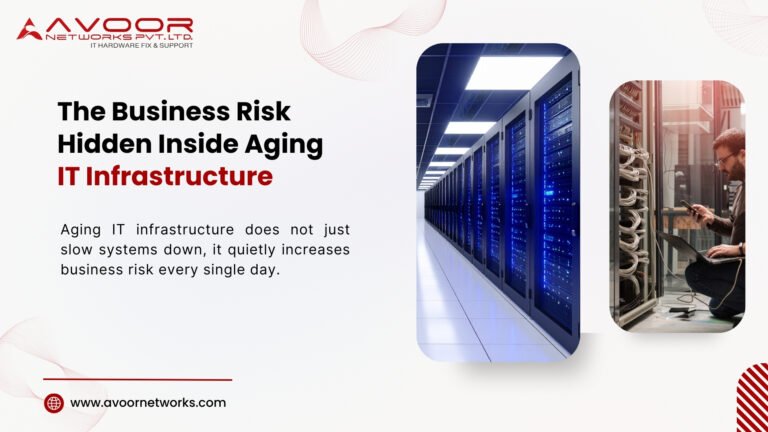
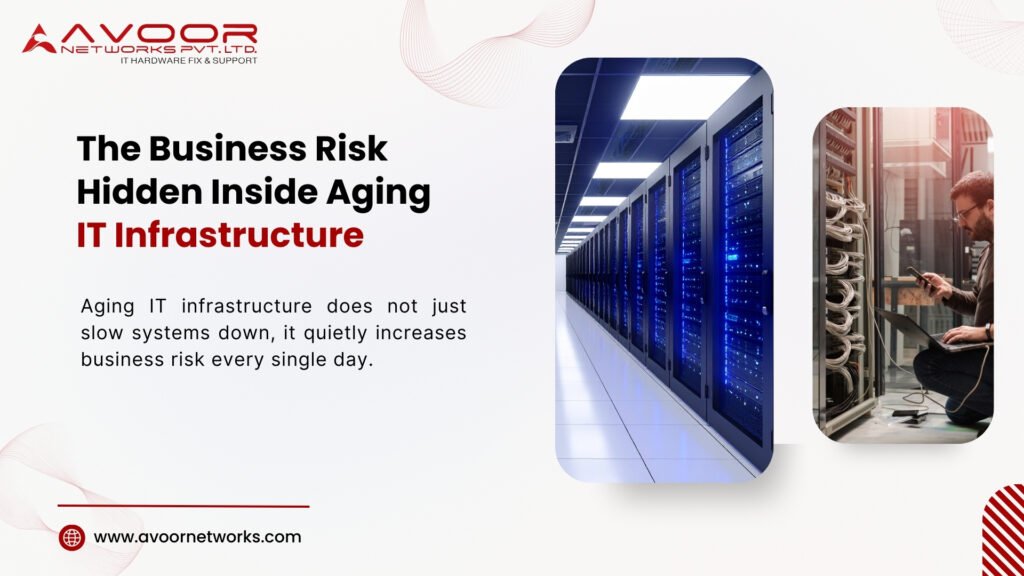
Aging IT infrastructure is one of the most underestimated business risks in modern enterprises. Routers, switches, servers, storage systems, and supporting hardware are often expected to run indefinitely as long as they are powered on and “seem to work.”
In reality, aging infrastructure quietly increases operational risk every year. While systems may appear stable on the surface, hidden weaknesses build beneath. When failures finally occur, they are often sudden, expensive, and disruptive to the business.
Understanding the business risks hidden inside aging IT infrastructure is critical for organizations that want to avoid downtime, protect data, and maintain operational stability.
1. Increased Downtime and Operational Disruptions
One of the most visible risks of aging IT infrastructure is increased downtime.
As infrastructure ages:
- Hardware components wear out
- Failure rates increase
- Recovery times become longer
Older systems are more likely to fail without warning. Even a single hardware failure can disrupt multiple business processes, especially in tightly integrated enterprise environments. What starts as a technical issue quickly becomes a business interruption affecting revenue and customer trust.
2. Rising Maintenance and Emergency Repair Costs
Aging IT infrastructure may appear cost-effective because it delays capital expenditure, but operational costs tell a different story.
Hidden costs include:
- Frequent emergency repairs
- Expensive spare parts
- Increased dependency on specialized support
As equipment ages, maintenance becomes reactive rather than planned. Emergency repairs are always more expensive and disruptive than preventive maintenance, steadily increasing total cost of ownership.
3. Security Vulnerabilities and Compliance Exposure
Security risk is one of the most dangerous consequences of aging IT infrastructure.
Older systems often:
- Run unsupported firmware
- Miss critical security patches
- Lack compatibility with modern security tools
This creates vulnerabilities that attackers can exploit. In regulated industries, outdated infrastructure may also lead to compliance violations, audits, and penalties. Security exposure is rarely visible until an incident occurs.
4. Performance Bottlenecks and Productivity Loss
Aging IT infrastructure struggles to support modern workloads.
Common performance issues include:
- Slower application response
- Network congestion
- Limited processing capacity
As performance degrades, employee productivity drops. Teams waste time waiting for systems to respond, troubleshooting issues, or working around limitations. Over time, these inefficiencies quietly erode operational effectiveness.
5. Lack of Vendor and OEM Support
As infrastructure reaches end-of-life, vendor and OEM support often ends.
This results in:
- No firmware updates
- Limited access to replacement parts
- Longer repair turnaround times
Without official support, even minor failures become difficult to resolve. Organizations relying on aging IT infrastructure face higher risk because recovery options are limited and slower.
6. Unpredictable Failure and Business Continuity Risk
One of the most dangerous aspects of aging IT infrastructure is unpredictability.
Failures no longer follow patterns:
- Components fail suddenly
- Multiple issues occur simultaneously
- Recovery timelines become uncertain
This unpredictability directly impacts business continuity planning. Enterprises are forced into reactive decision-making during crises, increasing downtime and operational risk.
7. Poor Scalability and Strategic Limitations
Aging IT infrastructure limits an organization’s ability to grow and adapt.
Legacy systems often:
- Cannot scale efficiently
- Lack compatibility with new technologies
- Restrict digital transformation initiatives
As business demands evolve, outdated infrastructure becomes a bottleneck. Strategic initiatives are delayed or abandoned because the existing infrastructure cannot support them reliably.
Managing Aging Infrastructure with Professional Support
Aging IT infrastructure does not always require immediate replacement. However, it does require structured management, risk assessment, and professional support.
With the right approach, organizations can:
- Extend usable hardware life safely
- Reduce failure risk
- Plan upgrades strategically
Ignoring aging infrastructure, on the other hand, guarantees higher risk over time.
Enterprise Infrastructure Support by Avoor Networks Pvt Ltd
Avoor Networks Pvt Ltd helps enterprises manage the risks associated with aging IT infrastructure through structured lifecycle support.
With 26+ years of experience, services include:
- Enterprise router, switch, and server support
- Preventive and corrective maintenance
- Chip-level hardware repair
- AMC and CAMC services
- Support for EOL and EOSL equipment
- Pan-India on-site and remote assistance
This approach allows organizations to control risk, reduce downtime, and plan infrastructure transitions effectively.
Conclusion
The business risk hidden inside aging IT infrastructure is rarely obvious until failure occurs. Increased downtime, rising costs, security exposure, and strategic limitations build quietly over time.
Enterprises that recognize these risks early can take control through proactive maintenance, professional hardware support, and structured lifecycle planning. Those that ignore aging infrastructure eventually face higher costs and greater disruption.
In today’s competitive environment, managing aging IT infrastructure is not just an IT responsibility. It is a business-critical decision.