Introduction
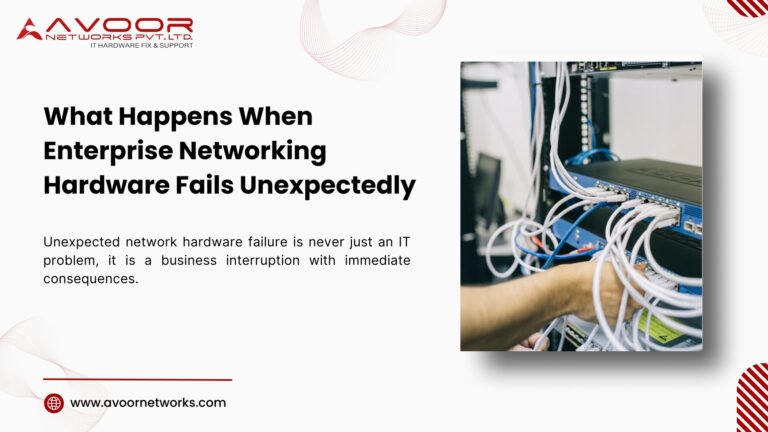
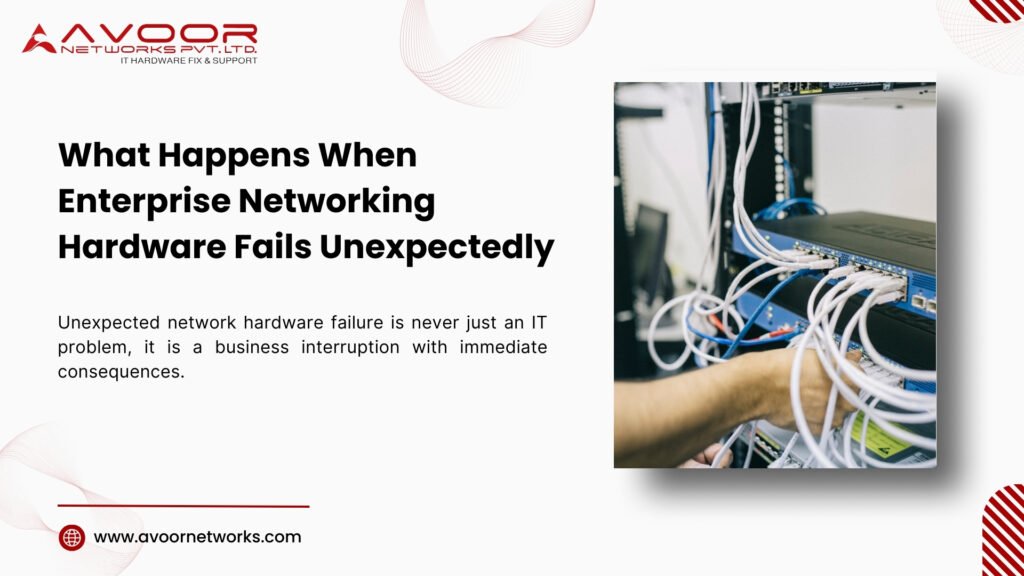
Enterprise network hardware is the backbone of modern business operations. Routers, switches, and servers enable connectivity, application access, data flow, and secure communication across the organization. When this hardware fails unexpectedly, the impact is immediate and often severe.
Unexpected failures are particularly dangerous because they leave no time for preparation. Unlike planned maintenance or upgrades, sudden hardware breakdowns disrupt operations without warning. Understanding what happens during such failures helps organizations recognize why proactive support and lifecycle management are critical.
1. Immediate Impact on Business Operations
When enterprise network hardware fails unexpectedly, the first impact is operational disruption.
Employees may lose:
- Access to internal systems
- Connectivity to applications
- Communication tools such as email or VoIP
In many enterprises, even a few minutes of disruption can halt workflows across departments. Manufacturing, finance, customer support, and logistics teams are often affected simultaneously.
The larger the organization, the wider the ripple effect.
2. Network Downtime and Productivity Loss
Unexpected failure of enterprise network hardware almost always results in downtime.
During downtime:
- Employees are idle
- Business processes stall
- Customer interactions are interrupted
Productivity losses accumulate quickly. What begins as a technical issue soon becomes a business problem, especially in environments that depend on real-time data and constant connectivity.
3. Application and Data Access Disruptions
Enterprise applications rely on stable network infrastructure.
When network hardware fails:
- ERP and CRM systems may become inaccessible
- Cloud applications lose connectivity
- Data transactions may fail or freeze
In some cases, incomplete data transactions can lead to inconsistencies or corruption. This adds recovery complexity and extends the time required to restore normal operations.
4. Security Risks During Hardware Failures
Unexpected failure of enterprise network hardware can expose security risks.
During outages:
- Firewalls or security gateways may stop functioning
- Monitoring tools may go offline
- Incident response visibility is reduced
This creates windows of vulnerability where threats can go undetected. In regulated industries, such incidents can also raise compliance concerns.
5. Financial and Operational Costs
The financial impact of unexpected enterprise network hardware failure is often underestimated.
Costs include:
- Revenue loss due to downtime
- Emergency repair expenses
- Overtime for IT teams
- SLA penalties and customer dissatisfaction
These costs multiply quickly, especially when failures occur during peak business hours.
6. Emergency Response Challenges
Without professional hardware support, emergency response becomes chaotic.
Common challenges include:
- Delayed fault diagnosis
- Lack of spare parts
- Dependency on OEM turnaround times
- Limited access to skilled engineers
What could have been a short outage turns into hours or even days of downtime due to slow response.
7. Long-Term Impact on IT Strategy
Repeated unexpected failures damage long-term IT planning.
Organizations may:
- Lose confidence in existing infrastructure
- Make rushed replacement decisions
- Overspend on emergency hardware purchases
Instead of following a structured lifecycle strategy, IT teams are forced into reactive decision-making, increasing long-term costs.
8. How Professional Hardware Support Minimizes Risk
Professional hardware support reduces the impact of unexpected failures by shifting from reactive to proactive management.
It helps by:
- Identifying risks before failures occur
- Performing preventive maintenance
- Ensuring rapid fault isolation and repair
- Providing spare parts availability
- Supporting end-of-life equipment safely
This approach significantly reduces both downtime duration and business impact.
9. Enterprise Support by Avoor Networks Pvt Ltd
Avoor Networks Pvt Ltd helps enterprises manage and protect enterprise network hardware against unexpected failures.
With 26+ years of experience, the company provides:
- Enterprise router, switch, and server support
- Preventive and corrective maintenance
- Chip-level hardware repair
- AMC and CAMC services
- Support for end-of-life and EOSL equipment
- Pan-India on-site and remote assistance
This structured support model ensures faster recovery and improved network resilience.
Conclusion
Unexpected failure of enterprise network hardware is more than a technical inconvenience. It disrupts operations, impacts revenue, exposes security risks, and forces reactive decision-making.
Organizations that understand these consequences are better positioned to invest in proactive maintenance and professional hardware support. By managing enterprise network hardware as a critical business asset, enterprises can reduce downtime, control costs, and maintain operational stability.
In an always-connected business environment, preparedness is the key to resilience.