Introduction
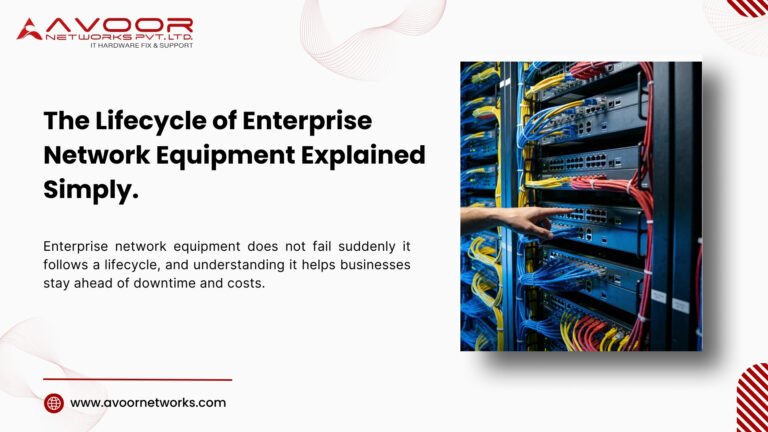
Infrastructure reliability is not achieved by accident. In enterprise IT environments, long-term reliability depends on a series of deliberate decisions made over time. Routers, switches, servers, storage systems, and supporting infrastructure are designed to run continuously, often under heavy workloads.
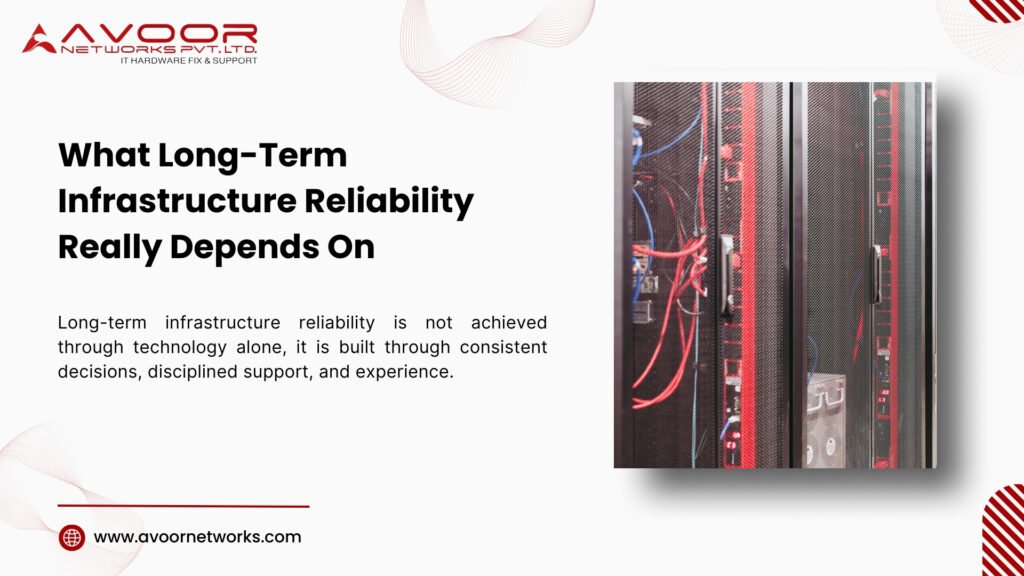
When infrastructure remains stable for years, it is rarely because of luck or brand alone. Reliability is the result of disciplined planning, correct implementation, consistent maintenance, and professional support. Organizations that understand this approach experience fewer outages, lower costs, and predictable operations.
This article explains what long-term infrastructure reliability really depends on and why enterprises that focus on these factors outperform those that rely on reactive fixes.
1. Strategic Infrastructure Planning
Long-term infrastructure reliability begins at the planning stage.
Poor planning leads to:
- Undersized hardware
- Lack of redundancy
- Bottlenecks under growth
Strategic planning considers future expansion, workload patterns, application requirements, and risk tolerance. Infrastructure designed only for today’s needs quickly becomes unstable as demand increases.
Well-planned infrastructure operates within safe limits, reducing stress on components and improving overall reliability.
2. Quality of Hardware and Architecture
Infrastructure reliability is directly influenced by hardware quality and architectural design.
Reliable infrastructure depends on:
- Enterprise-grade hardware
- Proven architectures
- Redundancy at critical points
Using consumer-grade or improperly matched hardware introduces instability. Similarly, poor architecture creates single points of failure that can bring down entire systems.
Balanced, resilient architecture ensures failures remain isolated instead of cascading across the environment.
3. Correct Deployment and Configuration
Even the best hardware fails when deployed incorrectly.
Infrastructure reliability suffers due to:
- Incorrect firmware versions
- Misconfigured interfaces
- Improper cabling and airflow
- Missing failover configurations
Correct deployment ensures hardware operates within design parameters from day one. Stable configurations reduce unexpected behavior and improve long-term consistency.
4. Preventive Maintenance Discipline
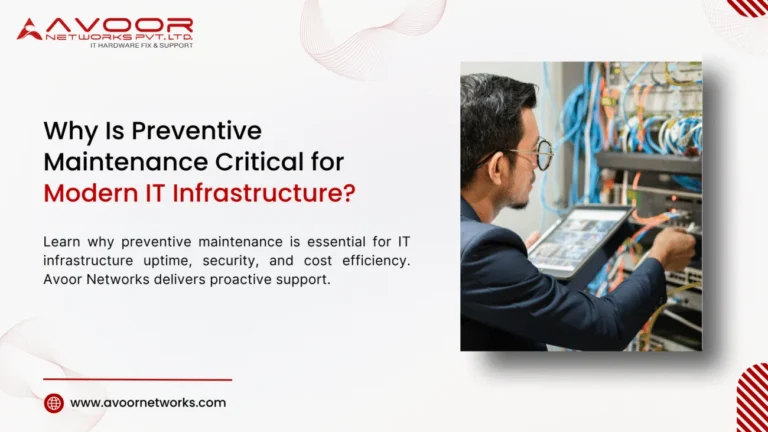
Preventive maintenance is one of the strongest contributors to infrastructure reliability.
This includes:
- Routine hardware inspections
- Cleaning dust and debris
- Checking power supplies and fans
- Reviewing logs and alerts
Organizations that skip preventive maintenance often face sudden failures that could have been avoided. Maintenance discipline keeps infrastructure healthy and extends hardware lifespan significantly.
5. Power and Environmental Stability
Infrastructure reliability depends heavily on stable operating conditions.
Key factors include:
- Clean and consistent power
- Proper grounding
- UPS and surge protection
- Adequate cooling and humidity control
Heat and power fluctuations slowly damage components even if no immediate failure occurs. Over time, these conditions dramatically reduce infrastructure reliability.
6. Monitoring and Proactive Response
Reliable infrastructure is monitored continuously.
Effective monitoring tracks:
- Performance trends
- Error rates
- Temperature and power alerts
- Early warning indicators
Monitoring alone is not enough. Proactive response is what prevents minor issues from becoming major outages. Early intervention protects infrastructure from long-term damage.
7. Professional Hardware Support and Lifecycle Management
Long-term infrastructure reliability ultimately depends on professional support.
Professional hardware support provides:
- Preventive and corrective maintenance
- Fast fault diagnosis and repair
- Spare parts availability
- Support for end-of-life equipment
Lifecycle management ensures infrastructure evolves in a controlled manner rather than through emergency replacements.
Enterprise Infrastructure Support by Avoor Networks Pvt Ltd
Avoor Networks Pvt Ltd helps enterprises achieve long-term infrastructure reliability through structured lifecycle support.
With 26+ years of experience, the company delivers:
- Enterprise router, switch, and server support
- Preventive and corrective maintenance
- Chip-level hardware repair
- AMC and CAMC services
- Support for EOL and EOSL equipment
- Pan-India on-site and remote assistance
This approach ensures stable operations, reduced downtime, and predictable infrastructure performance.
Conclusion
Long-term infrastructure reliability does not depend on a single tool, vendor, or upgrade. It depends on consistent execution across planning, deployment, maintenance, monitoring, and professional support.
Enterprises that invest in these seven factors experience fewer outages, lower operational risk, and greater confidence in their IT environments. Infrastructure reliability is not a one-time achievement. It is an ongoing discipline.
In today’s always-on enterprise landscape, reliable infrastructure is not optional. It is the foundation of sustainable business operations.