Introduction
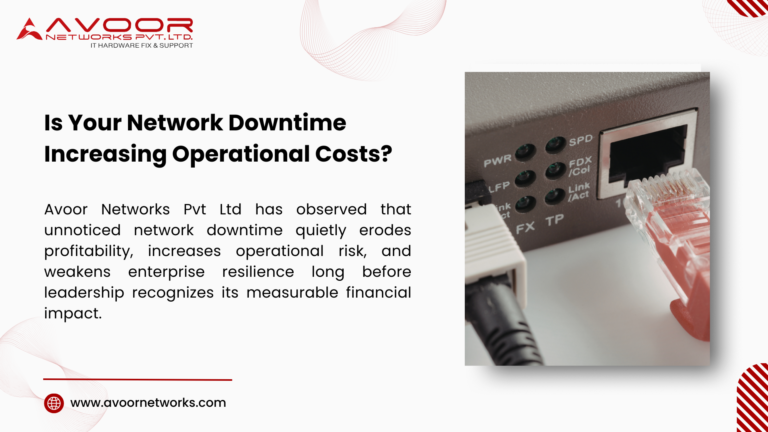
Network downtime operational costs are often underestimated because their impact extends beyond immediate repair expenses. When enterprise networks fail—even briefly—the financial consequences ripple across departments, customers, vendors, and leadership teams. Modern enterprises depend on stable connectivity for ERP systems, cloud platforms, VoIP communications, cybersecurity monitoring, data access, and customer-facing applications.
When networks go down, operations stall.
However, many organizations focus only on visible losses such as hardware replacement or emergency service fees. The true scope of network downtime operational costs includes productivity loss, SLA penalties, reputational damage, compliance exposure, delayed decision-making, and strategic disruption.
Downtime is not simply an IT problem, it is a business cost multiplier.
If your network experiences recurring instability, operational costs may be rising silently. Below are nine critical impacts that demonstrate how downtime directly affects enterprise financial performance and long-term stability.
1. Lost Employee Productivity Increases Network Downtime Operational Costs
The most immediate impact of downtime is workforce inactivity.
When core systems are inaccessible:
- Employees cannot access databases
- Sales teams lose CRM visibility
- Finance departments cannot process transactions
- Manufacturing systems halt production workflows
- Support teams cannot respond to customer requests
Even short interruptions compound across hundreds or thousands of employees.
For example, a 60-minute outage in a 500-employee enterprise can translate into thousands of productive hours lost annually if outages are frequent.
Network downtime operational costs escalate rapidly when downtime becomes normalized rather than treated as urgent.
Productivity loss is often invisible in accounting statements—but it directly impacts output and revenue.
2. Revenue Disruption Amplifies Network Downtime Operational Costs
Enterprises increasingly rely on digital transactions.
E-commerce platforms, SaaS subscriptions, payment gateways, and digital service delivery models require continuous connectivity.
When networks fail:
- Online transactions stop
- Order processing is delayed
- Customer checkouts fail
- Data synchronization halts
Revenue loss during peak business hours can be substantial.
Network downtime operational costs in revenue-driven environments may exceed repair expenses many times over.
Even if systems are restored quickly, missed transactions and abandoned customer sessions may never be recovered.
Revenue disruption is one of the most measurable and severe consequences of instability.
3. SLA Penalties and Contractual Liabilities Escalate Costs
Many enterprises operate under Service Level Agreements (SLAs).
These agreements include uptime guarantees and performance thresholds. Network downtime directly jeopardizes SLA compliance.
Consequences include:
- Financial penalties
- Contract renegotiations
- Termination risk
- Loss of preferred vendor status
Repeated downtime weakens negotiating power.
Network downtime operational costs therefore extend into legal and contractual domains.
Maintaining network reliability protects not only systems—but also commercial relationships.
4. Emergency Repairs Inflate Network Downtime Operational Costs
Reactive environments rely on emergency support.
Emergency repairs often involve:
- Expedited shipping
- After-hours engineering fees
- Temporary equipment rental
- Rapid procurement at premium pricing
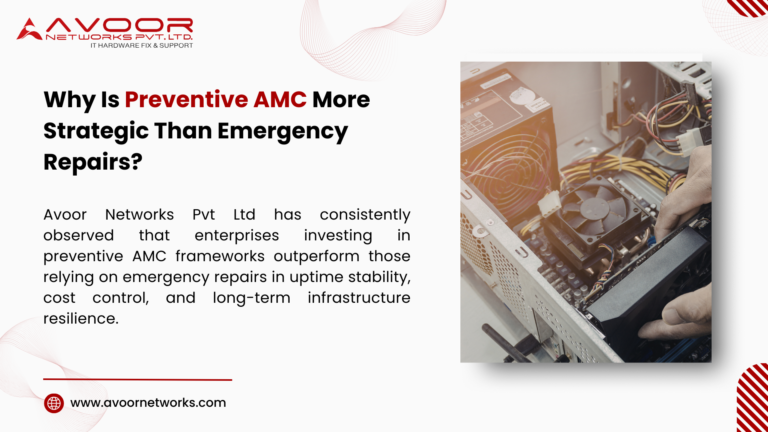
These expenses are significantly higher than structured preventive maintenance programs.
Repeated reactive intervention indicates governance gaps.
Network downtime operational costs increase when organizations remain in crisis-response mode rather than preventive control.
Long-term financial stability requires shifting from emergency spending to predictable maintenance investment.
5. Reputational Damage Expands Long-Term Costs
Customers expect continuous availability.
When networks fail:
- Clients experience service interruption
- Support calls increase
- Social media criticism may arise
- Trust erodes
Reputational damage often extends beyond immediate outage duration.
Lost trust reduces renewal probability and client referrals.
Network downtime operational costs therefore include long-term revenue erosion due to diminished brand credibility.
Reputation recovery requires sustained reliability—not marketing.
6. Compliance and Security Exposure Increase Network Downtime Operational Costs
Network outages sometimes coincide with security vulnerabilities.
Unplanned downtime may disrupt:
- Intrusion detection systems
- Firewall monitoring
- Logging mechanisms
- Audit trail capture
In regulated industries, instability can create compliance violations.
Consequences may include:
- Regulatory penalties
- Audit failures
- Mandatory remediation efforts
Security and compliance risk adds another layer to network downtime operational costs.
Reliability governance supports risk mitigation beyond uptime metrics.
7. IT Team Burnout and Talent Attrition Drive Hidden Costs
Frequent network instability creates continuous stress for IT teams.
Reactive firefighting leads to:
- Extended working hours
- Weekend emergency calls
- Reduced morale
- Increased turnover
Replacing experienced infrastructure engineers incurs recruitment and training expenses.
Network downtime operational costs include talent instability.
Stable infrastructure supports workforce sustainability.
Organizations that prioritize preventive maintenance reduce burnout and preserve institutional knowledge.
8. Strategic Initiatives Stall During Instability
Digital transformation projects depend on stable foundations.
Network instability disrupts:
- Cloud migrations
- ERP upgrades
- Data analytics initiatives
- Infrastructure modernization
Leadership may delay strategic programs due to fear of additional strain on unstable networks.
Network downtime operational costs therefore include opportunity cost.
Missed innovation windows and delayed transformation reduce competitive positioning.
Reliability enables strategic momentum.
9. Compounded Financial Impact Over Time
Isolated downtime events may appear manageable.
However, recurring outages compound cost over months and years.
Consider the cumulative effect of:
- Productivity loss
- Revenue disruption
- SLA penalties
- Emergency repair fees
- Reputation erosion
- Compliance exposure
- Talent turnover
Network downtime operational costs grow exponentially when instability persists.
Enterprises that calculate only direct hardware repair expenses underestimate total exposure.
Holistic cost assessment reveals that preventive governance is economically superior to reactive repair.
Shifting from Reactive to Preventive Control
Reducing network downtime operational costs requires strategic transformation.
Organizations must implement:
- Preventive maintenance schedules
- Structured AMC programs
- Firmware governance
- Environmental monitoring
- Redundancy validation
- Proactive performance benchmarking
Preventive governance reduces incident frequency and severity.
Cost stabilization follows reliability improvement.
Financial Modeling Perspective
Financial leaders should evaluate downtime impact across categories:
- Direct IT remediation cost
- Productivity loss value
- Revenue disruption
- Contractual penalties
- Brand recovery effort
- Talent replacement cost
When aggregated, network downtime operational costs often exceed preventive maintenance investment many times over.
Budget reallocation toward stability yields measurable ROI.
Enterprise Network Stability by Avoor Networks Pvt Ltd
Avoor Networks Pvt Ltd helps enterprises reduce network downtime operational costs through structured preventive AMC programs, chip-level repair, EOL/EOSL support, and pan-India service coverage.
With over 26+ years of experience, services include:
- Multi-brand router and switch maintenance
- Preventive inspection and diagnostics
- Component-level repair
- Redundancy planning
- Lifecycle extension strategies
This approach shifts enterprises from emergency repair cycles to disciplined reliability governance.
Conclusion
Network downtime operational costs extend far beyond hardware repair invoices.
Lost productivity, revenue disruption, SLA penalties, reputational damage, compliance exposure, talent burnout, and strategic delays collectively amplify financial impact.
Organizations that treat downtime as isolated technical events underestimate its cumulative business consequences.
Reducing operational costs requires reducing instability.
Enterprises that invest in preventive governance, structured maintenance, and proactive monitoring convert downtime from recurring liability into controlled risk.
Network stability is not merely IT performance.
It is financial strategy.