Introduction to the Lifecycle of Enterprise Network Equipment
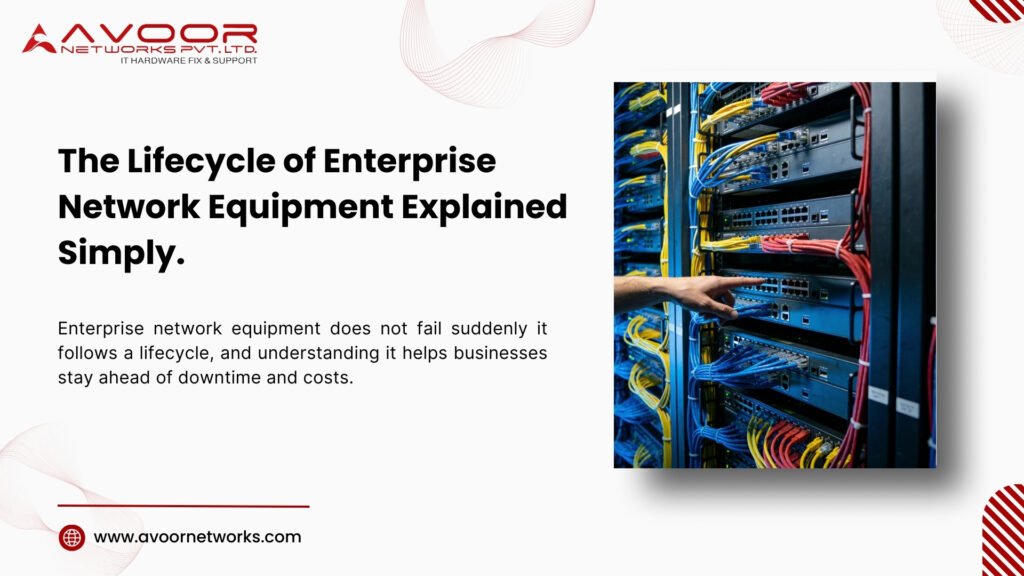
The lifecycle of enterprise network equipment is often misunderstood as a simple buy-use-replace process. In reality, it is a structured journey that determines performance, uptime, security, and long-term IT costs.
Enterprise routers, switches, firewalls, servers, and data center devices are long-term assets. Managing them correctly from planning to retirement can save organizations lakhs in downtime, replacements, and emergency repairs.
1. Understanding the Lifecycle of Enterprise Network Equipment
The lifecycle of enterprise network equipment refers to the complete journey of network hardware from initial planning to final retirement. This includes routers, switches, firewalls, servers, and other critical infrastructure components that keep enterprise IT environments running.
Many organizations treat network hardware as a one-time purchase. In reality, enterprise equipment is a long-term operational asset that requires structured management to ensure reliability, performance, and security over time.
A clearly defined lifecycle approach helps enterprises reduce downtime, avoid unnecessary capital expenditure, and maintain predictable IT operations.
2. Planning and Design Stage
The lifecycle of enterprise network equipment begins long before any hardware is purchased.
This stage focuses on understanding:
- Business objectives and growth plans
- Network traffic requirements
- Security and compliance needs
- Redundancy and availability expectations
- Budget constraints and ROI
Poor planning often results in underperforming networks, frequent bottlenecks, and premature equipment replacement. A well-designed network, on the other hand, can support business growth for years with minimal disruption.
This stage sets the foundation for the entire enterprise network lifecycle.
3. Procurement and Deployment Phase
Once planning is complete, the next stage involves selecting and deploying the right equipment.
Key activities in this phase include:
- Choosing appropriate hardware models and configurations
- Ensuring compatibility with existing infrastructure
- Physical installation and rack management
- Network configuration and testing
Deployment errors are one of the most common causes of long-term network instability. Even high-end enterprise hardware can fail prematurely if deployed without proper configuration and environmental considerations.
Correct deployment ensures the lifecycle of enterprise network equipment starts on a stable footing.
4. Operational Usage and Monitoring
After deployment, network equipment enters the longest phase of its lifecycle: daily operations.
During this stage, equipment:
- Handles live production traffic
- Supports business-critical applications
- Processes user and system data continuously
Continuous monitoring during this phase is essential. Performance metrics, error logs, and utilization trends help IT teams identify issues before they impact users.
Organizations that actively monitor their network infrastructure experience fewer outages and more consistent performance throughout the enterprise network lifecycle.
5. Maintenance and Support Management
Maintenance is one of the most overlooked yet critical stages in the lifecycle of enterprise network equipment.
This stage includes:
- Preventive maintenance checks
- Firmware and configuration management
- Hardware diagnostics
- Component-level troubleshooting
Without structured maintenance, minor issues gradually turn into major failures. Dust accumulation, power irregularities, aging components, and unnoticed configuration drift significantly reduce equipment lifespan.
Professional maintenance and timely repairs can extend network hardware usability well beyond manufacturer expectations.
6. Upgrade and Scalability Decisions
As enterprises grow, network requirements evolve.
This stage focuses on deciding when to:
- Increase bandwidth capacity
- Add redundancy
- Upgrade modules or interfaces
- Enhance security capabilities
Upgrading does not always mean full replacement. In many cases, targeted upgrades can significantly improve performance while keeping costs under control.
Smart upgrade decisions help enterprises maintain performance and scalability without disrupting the overall enterprise IT infrastructure lifecycle.
7. End-of-Life and Replacement Strategy
Every network device eventually reaches its end-of-life stage.
End-of-life typically means:
- Manufacturer support has ended
- Software updates are no longer available
- Replacement parts become limited
However, end-of-life does not automatically mean end-of-use. With expert support and risk assessment, many enterprises safely continue operating EOL equipment while planning structured replacements.
A well-planned replacement strategy avoids emergency purchases and ensures smooth transitions within the lifecycle of enterprise network equipment.
8. Why Lifecycle Management Is Critical for Enterprises
Managing the complete enterprise network lifecycle delivers several long-term benefits:
- Reduced unplanned downtime
- Lower total cost of ownership
- Improved network reliability
- Better security posture
- Predictable IT budgets
Organizations that adopt lifecycle management move from reactive troubleshooting to proactive infrastructure planning. This shift directly improves operational stability and business continuity.
9. Enterprise Lifecycle Support by Avoor Networks Pvt Ltd
Avoor Networks Pvt Ltd supports enterprises across every stage of the lifecycle of enterprise network equipment.
With over 26+ years of experience, the company provides:
- Network planning and infrastructure assessments
- Enterprise deployment and configuration support
- Preventive and corrective maintenance
- Chip-level network hardware repair
- AMC and CAMC services
- Refurbished, rental, and replacement solutions
This end-to-end lifecycle approach enables enterprises to maximize hardware value, minimize downtime, and maintain uninterrupted operations across India.
Conclusion: Simplifying the Enterprise Network Equipment Lifecycle
The lifecycle of enterprise network equipment is not just a technical process. It is a strategic framework that directly impacts business continuity, cost efficiency, and operational reliability.
By understanding each stage from planning and deployment to maintenance, upgrades, and retirement, enterprises can make informed decisions that extend hardware lifespan and reduce operational risk. Organizations that actively manage this lifecycle avoid costly downtime and gain greater control over their IT infrastructure.
In modern enterprise environments, network equipment is a long-term business asset. Managing its lifecycle effectively ensures stable performance, scalable growth, and sustained operational excellence.