Introduction
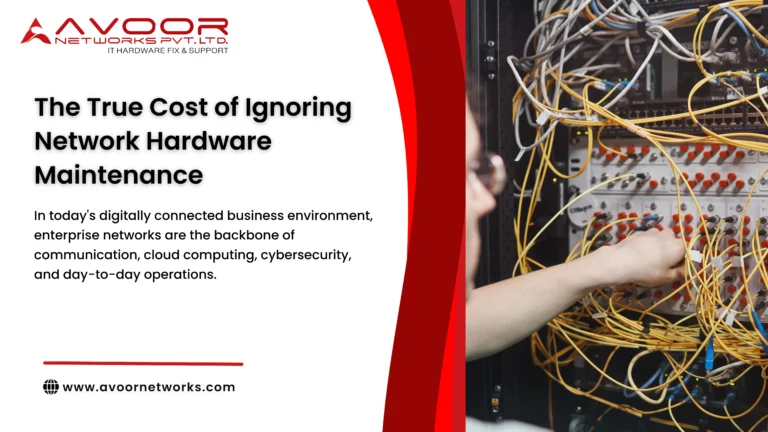
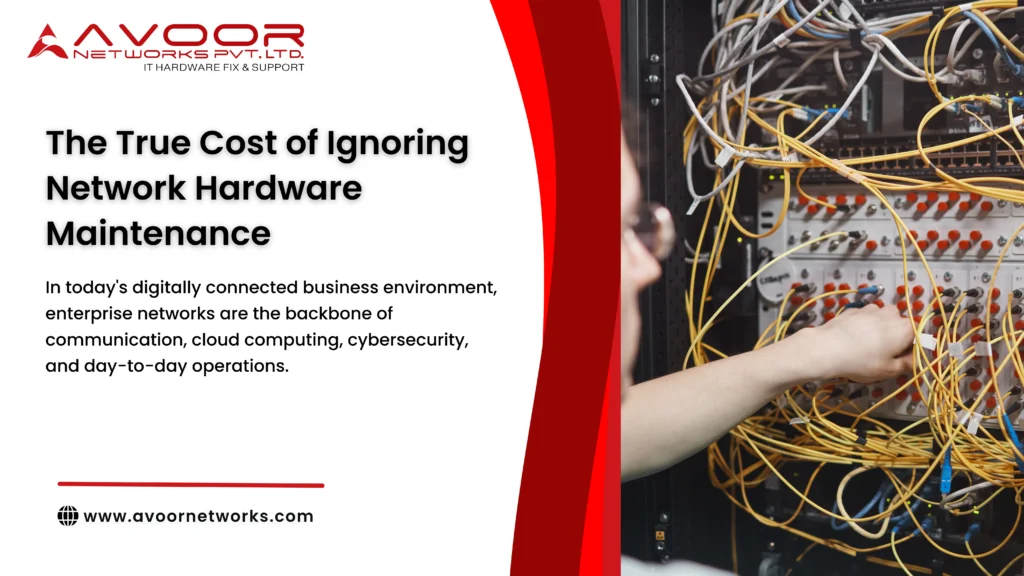
Enterprise networks are the backbone of modern businesses, connecting employees, customers, cloud applications, data centers, and mission-critical systems. true cost of ignoring network hardware maintenance Organizations rely on routers, switches, firewalls, servers, storage systems, and wireless infrastructure to maintain uninterrupted operations. However, many businesses overlook one critical aspect of IT infrastructure management network hardware maintenance.
Ignoring routine maintenance may seem like a way to reduce short-term expenses, but it often leads to significantly higher long-term costs. Unexpected hardware failures, prolonged downtime, security vulnerabilities, emergency repairs, and reduced equipment lifespan can negatively impact productivity and profitability.
The true cost of ignoring network hardware maintenance goes beyond repair expenses. It includes lost business opportunities, customer dissatisfaction, operational disruptions, and premature hardware replacement. At Avoor Networks Pvt. Ltd., with over 26+ years of experience in enterprise network hardware repair and maintenance, we help organizations prevent costly failures through preventive maintenance, chip-level repair, AMC/CAMC services, and nationwide technical support.
This guide explains the hidden costs of neglected maintenance and why proactive care is essential for every enterprise network.true cost of ignoring network hardware maintenance, true cost of ignoring network hardware maintenance.
What Is Network Hardware Maintenance?
Network hardware maintenance involves scheduled inspections, testing, cleaning, firmware updates, diagnostics, and repairs to ensure networking equipment continues to operate efficiently and reliably.
Maintenance typically includes:
- Preventive inspections
- PCB-level diagnostics
- Firmware upgrades
- Port testing
- Power supply inspection
- Cooling system maintenance
- Performance monitoring
- Hardware cleaning
- Component replacement
- Documentation and reporting
Regular maintenance keeps enterprise infrastructure operating at peak performance.
The Hidden Costs of Ignoring Network Hardware Maintenance
1. Increased Network Downtime
One of the biggest consequences of poor maintenance is unexpected downtime.
When critical devices fail, businesses may experience:
- Loss of internet connectivity
- Application outages
- Communication disruptions
- Interrupted customer services
- Delayed business operations
Even a few hours of downtime can have a significant impact on productivity and customer satisfaction.
2. Higher Repair Costs
Minor hardware issues are much less expensive to fix than major failures.
Without routine maintenance:
- Small component faults become larger failures.
- Power issues damage additional circuitry.
- Overheating affects multiple components.
- Emergency repair costs increase.
Preventive maintenance identifies problems before they become costly repairs.
3. Shortened Equipment Lifespan
Enterprise networking equipment is designed to operate for many years.
Ignoring maintenance accelerates wear caused by:
- Dust accumulation
- Heat
- Power instability
- Component aging
- Cooling failure
Routine servicing extends the lifespan of routers, switches, firewalls, and servers, maximizing return on investment.
4. Reduced Network Performance
Poorly maintained hardware often causes:
- Slow network speeds
- Packet loss
- Increased latency
- Interface errors
- Frequent disconnections
Performance issues affect employee productivity and the user experience.
5. Increased Security Risks
Outdated firmware and neglected hardware can expose networks to:
- Known software vulnerabilities
- Unauthorized access
- Malware attacks
- Ransomware
- Data breaches
Routine maintenance includes firmware updates and security checks that help protect business-critical infrastructure.
6. Emergency Hardware Replacement
When hardware is neglected for too long, repairs may no longer be possible.
Organizations may be forced to purchase:
- New switches
- Enterprise routers
- Firewalls
- Servers
- Storage controllers
Emergency replacements are significantly more expensive than scheduled maintenance or component-level repairs.
7. Loss of Business Productivity
Network outages impact every department.
Common consequences include:
- Delayed projects
- Reduced employee efficiency
- Missed customer commitments
- Interrupted remote work
- Lower operational output
Reliable network infrastructure is essential for maintaining business continuity.
8. Higher Operational Costs
Unexpected failures often result in:
- Emergency service charges
- Expedited spare part procurement
- Overtime labor
- Increased IT support costs
- Additional downtime-related expenses
Preventive maintenance offers predictable and controlled maintenance costs.
9. Compliance and Audit Challenges
Many industries require documented maintenance records to support operational and security standards.
Ignoring maintenance can lead to:
- Incomplete service documentation
- Audit observations
- Compliance issues
- Increased operational risk
Maintaining detailed service records simplifies compliance management.
10. Loss of Customer Trust
Customers expect uninterrupted digital services.
Frequent network failures can result in:
- Poor customer experiences
- Delayed service delivery
- Reputation damage
- Reduced customer confidence
A stable and well-maintained network strengthens business credibility.
Best Practices to Prevent Costly Network Failures
Organizations can minimize maintenance-related costs by following these best practices:
- Schedule preventive maintenance every 6–12 months.
- Monitor hardware health continuously.
- Update firmware regularly.
- Inspect power supplies and UPS systems.
- Keep cooling systems clean and operational.
- Replace aging components before failure.
- Test redundancy and failover systems.
- Maintain accurate maintenance documentation.
- Perform routine PCB diagnostics.
- Partner with experienced network hardware specialists.
A proactive approach reduces downtime and improves long-term reliability.
Benefits of Preventive Network Hardware Maintenance
Businesses that invest in preventive maintenance enjoy:
- Higher network availability
- Reduced emergency repairs
- Lower maintenance costs
- Longer hardware lifespan
- Improved cybersecurity
- Better network performance
- Predictable maintenance budgets
- Increased return on IT investments
- Enhanced business continuity
Preventive maintenance transforms IT infrastructure from a reactive expense into a strategic business asset.
Why Choose Avoor Networks Pvt. Ltd.?
Avoor Networks Pvt. Ltd. is a trusted provider of enterprise network hardware repair and maintenance services across India with 26+ years of industry experience.
Our services include:
- Cisco Router Repair
- Cisco Switch Repair
- Firewall Repair Services
- Server Motherboard Repair
- Storage Hardware Repair
- PCB-Level Chip Repair
- Annual Maintenance Contracts (AMC)
- Comprehensive Annual Maintenance Contracts (CAMC)
- Preventive Maintenance Services
- Data Center Network Support
- Refurbished Network Hardware Sales
- Network Hardware Rental & Leasing
- PAN India Pickup & Delivery
We support leading brands, including Cisco, Juniper, HPE, Dell, Fortinet, Aruba, Netgear, IBM, Palo Alto Networks, and Extreme Networks. Our certified engineers use advanced diagnostics and OEM-grade repair procedures to keep enterprise networks running efficiently.
Conclusion
The true cost of ignoring network hardware maintenance extends far beyond repair bills. Downtime, security risks, reduced productivity, shortened equipment lifespan, and emergency replacements can significantly impact business operations and profitability.
By adopting preventive maintenance, continuous monitoring, timely firmware updates, and professional chip-level repair services, organizations can protect their network infrastructure and maximize the value of their technology investments.
Partner with Avoor Networks Pvt. Ltd. for reliable network hardware maintenance solutions that reduce downtime, lower operational costs, and ensure your enterprise network remains secure, efficient, and ready for future growth.