Introduction
Cisco networking equipment powers some of the world’s largest enterprise networks, data centers, cloud infrastructures, financial institutions, healthcare organizations, and government agencies. Cisco routers, switches, firewalls, wireless controllers, IP phones, and network security appliances are known for their reliability and performance. However, like any enterprise hardware, Cisco devices are subject to wear, environmental conditions, electrical issues, and aging components that can eventually lead to failures.
Replacing enterprise networking hardware every time a fault occurs is expensive and often unnecessary. In many cases, professional Cisco hardware repair and maintenance can restore equipment to full functionality while significantly reducing costs and extending product lifespan.
At Avoor Networks Pvt. Ltd., we bring 26+ years of expertise in Cisco hardware repair, chip-level PCB repair, preventive maintenance, AMC/CAMC services, refurbished hardware sales, and emergency network support. This guide explains everything organizations need to know about Cisco Hardware Repair and Maintenance repair, maintenance best practices, and how to maximize the lifespan of enterprise networking equipment.
What Is Cisco Hardware Repair?
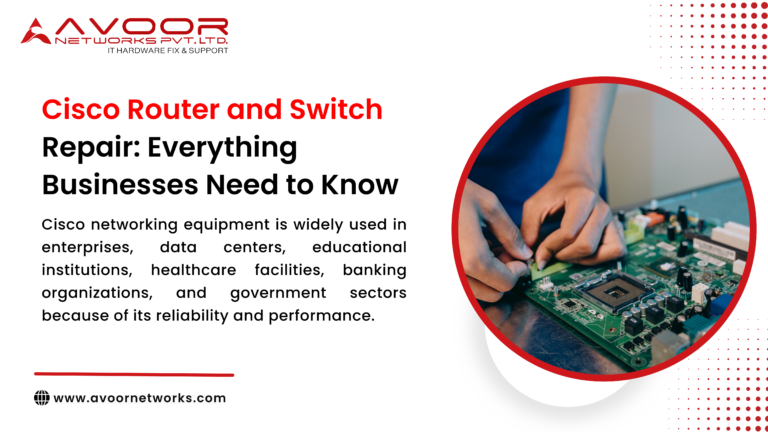
Cisco hardware repair involves diagnosing, repairing, restoring, and testing Cisco networking equipment to return it to optimal working condition. Unlike simple part replacement, professional repair includes detailed component-level analysis to identify the exact cause of failure.
Devices commonly repaired include:
- Cisco Routers
- Cisco Switches
- Cisco Firewalls
- Cisco Catalyst Switches
- Cisco Nexus Switches
- Cisco ISR & ASR Routers
- Cisco Wireless Controllers
- Cisco IP Phones
- Cisco UCS Servers
- Cisco Power Supplies
- Cisco Network Modules
- Cisco Interface Cards
Professional repair helps organizations reduce replacement costs while maintaining network reliability.
Common Cisco Hardware Failures
Enterprise Cisco equipment Cisco Hardware Repair and Maintenance operates continuously, making it susceptible to hardware-related issues over time.
Power Supply Failure
Power supply units (PSUs) may fail due to:
- Voltage fluctuations
- Component aging
- Capacitor failure
- Overheating
- Electrical surges
Common symptoms include:
- Device not powering on
- Unexpected shutdowns
- Continuous reboot loops
- PSU alarm indicators
Motherboard and PCB Failure
The printed circuit board (PCB) is the heart of Cisco hardware.
Common PCB problems include:
- Burnt ICs
- Damaged MOSFETs
- Short circuits
- Failed voltage regulators
- Broken PCB traces
PCB-level repair often restores hardware at a fraction of replacement costs.
Ethernet Port Failure
Damaged network ports may result from:
- Electrical surges
- Improper cable handling
- Physical damage
- Static discharge
Symptoms include:
- Port not detecting cable
- Frequent link drops
- Slow data transfer
- LED failure
Cooling System Failure
Cooling components require periodic maintenance.
Typical issues include:
- Fan failure
- Dust accumulation
- Airflow blockage
- High operating temperature
Overheating significantly reduces hardware lifespan.
Firmware Corruption
Firmware issues may occur because of:
- Interrupted upgrades
- Flash memory corruption
- Software incompatibility
Symptoms include:
- Boot failure
- ROMMON mode
- Configuration errors
- System crashes
Why Professional Cisco Hardware Repair Matters
Professional repair offers several advantages:
- Lower repair costs compared to replacement
- Extended equipment lifespan
- Faster turnaround
- Environmentally sustainable reuse
- Preservation of existing network infrastructure
- Reduced electronic waste
Organizations can continue using reliable Cisco equipment without unnecessary capital expenditure.
The Cisco Hardware Repair Process
1. Initial Diagnosis
Every repair begins with detailed diagnostics.
Engineers inspect:
- Power circuits
- PCB components
- Network ports
- Internal voltages
- Boot sequence
- Error logs
Accurate diagnosis ensures efficient repair.
2. Component-Level Repair
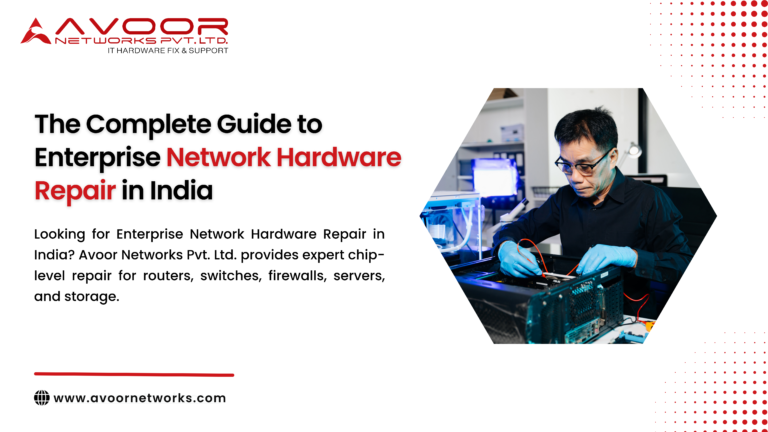
Instead of replacing entire boards, chip-level repair focuses on:
- IC replacement
- MOSFET replacement
- Capacitor replacement
- BGA rework
- Connector repair
- PCB trace restoration
This approach significantly reduces repair costs.
3. Firmware Recovery
When firmware issues are detected:
- Flash memory is verified
- Firmware is restored
- Bootloader is repaired
- Configuration is validated
Software recovery ensures stable operation.
4. Functional Testing
Every repaired Cisco device undergoes:
- Port testing
- Throughput testing
- Burn-in testing
- Power stability checks
- Thermal testing
- Continuous uptime validation
Testing confirms long-term reliability.
Preventive Maintenance for Cisco Hardware
Cisco Hardware Repair and Maintenance Preventive maintenance reduces unexpected failures.
Recommended activities include:
Regular Cleaning
Remove:
- Dust
- Moisture
- Airflow obstructions
Clean cooling systems improve hardware reliability.
Firmware Updates
Updated firmware provides:
- Security patches
- Performance improvements
- Bug fixes
- Compatibility enhancements
Always verify compatibility before deployment.
Power System Inspection
Inspect:
- UPS systems
- Power supplies
- Grounding
- Voltage stability
Clean power significantly extends equipment life.
Network Health Monitoring
Monitor:
- CPU utilization
- Memory usage
- Temperature
- Interface errors
- Link status
- Packet loss
Continuous monitoring identifies issues before failure occurs.
Benefits of Cisco Hardware Maintenance
Organizations implementing structured maintenance experience:
- Reduced downtime
- Longer equipment lifespan
- Lower repair costs
- Better network performance
- Improved security
- Increased productivity
- Predictable maintenance budgets
- Better return on investment
Why Choose Avoor Networks Pvt. Ltd.?
Avoor Networks Pvt. Ltd. is one of India’s trusted specialists in enterprise networking hardware repair with 26+ years of experience.
Our Cisco services include:
- Cisco Router Repair
- Cisco Switch Repair
- Cisco Catalyst Repair
- Cisco Nexus Repair
- Cisco Firewall Repair
- Cisco UCS Server Repair
- PCB-Level Chip Repair
- Power Supply Repair
- Interface Module Repair
- Annual Maintenance Contracts (AMC)
- Comprehensive AMC (CAMC)
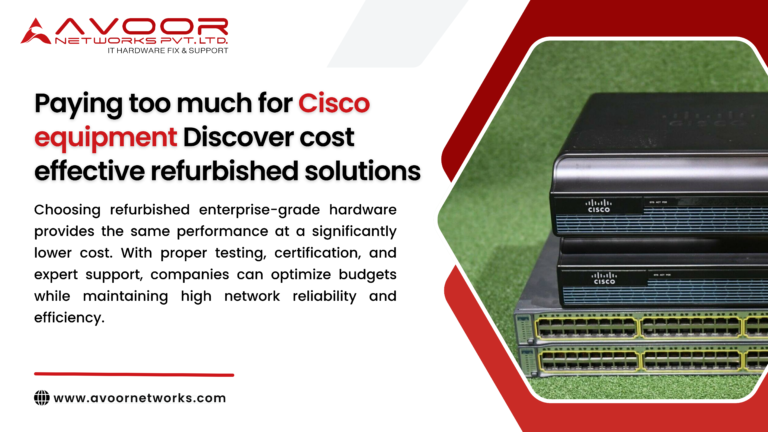
- Refurbished Cisco Hardware Sales
- Cisco Hardware Rental & Leasing
- PAN India Pickup & Delivery
Our engineers specialize in chip-level diagnostics, OEM-grade repair procedures, and comprehensive testing to restore Cisco equipment to reliable operating condition.
Best Practices for Extending Cisco Hardware Life
To maximize Cisco hardware lifespan:
- Schedule preventive maintenance every 6–12 months.
- Keep firmware updated with Cisco-approved releases.
- Maintain proper airflow and cooling.
- Protect equipment with quality UPS systems.
- Monitor network health continuously.
- Replace worn fans and power supplies proactively.
- Use genuine compatible spare parts.
- Maintain detailed service and maintenance records.
Following these practices reduces failures and improves long-term network stability.
Conclusion
Cisco networking equipment is a critical investment for enterprise IT infrastructure. With proper maintenance, timely repairs, and expert diagnostics, organizations can significantly extend the lifespan of their hardware while reducing operational costs.
Professional Cisco hardware repair and maintenance help prevent unexpected downtime, improve network reliability, and maximize return on investment. Instead of replacing expensive networking devices, businesses can benefit from component-level repairs, preventive maintenance, and comprehensive support.
With Avoor Networks Pvt. Ltd. as your trusted technology partner, you gain access to experienced engineers, advanced repair capabilities, and nationwide support for all your Cisco networking hardware requirements.